

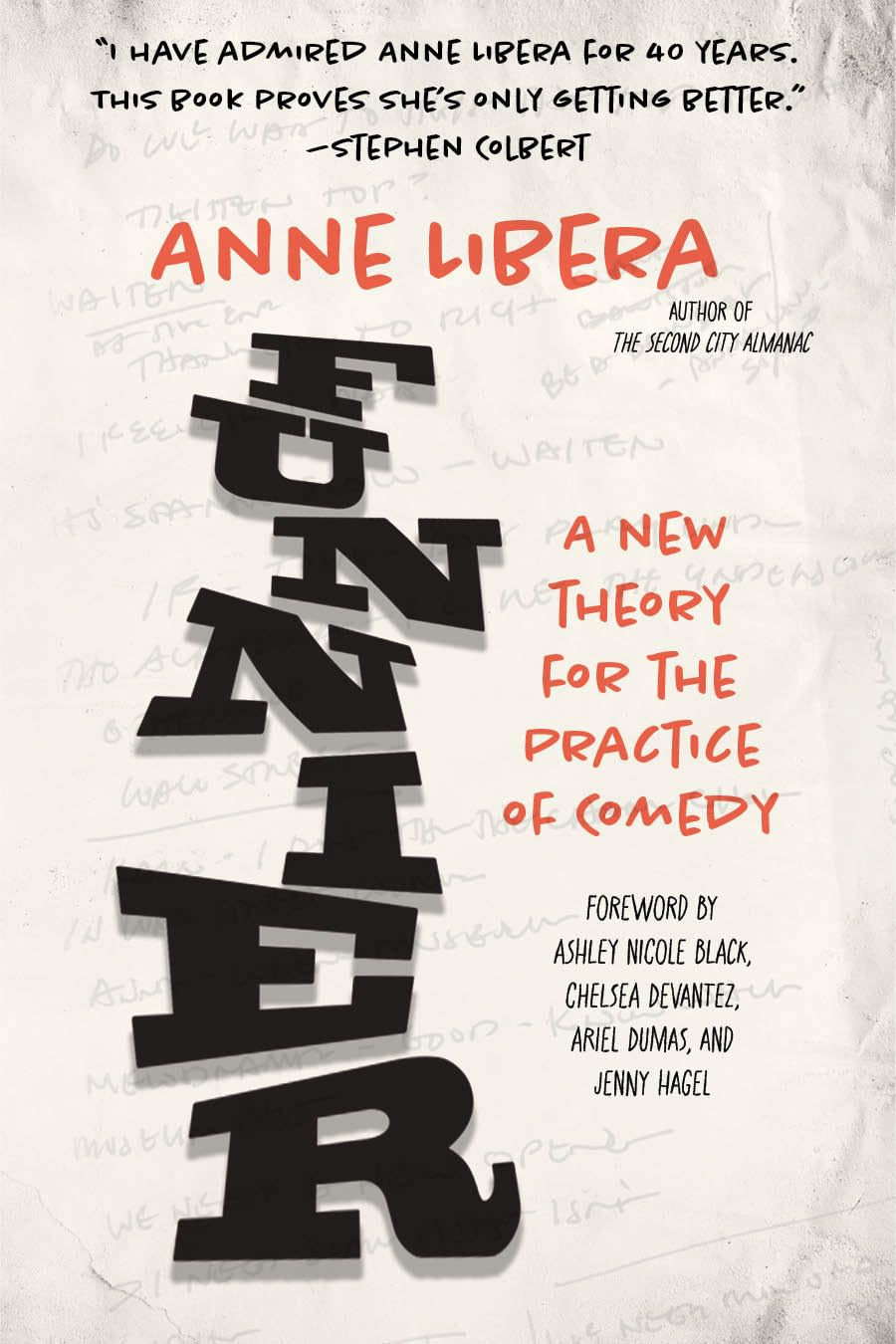
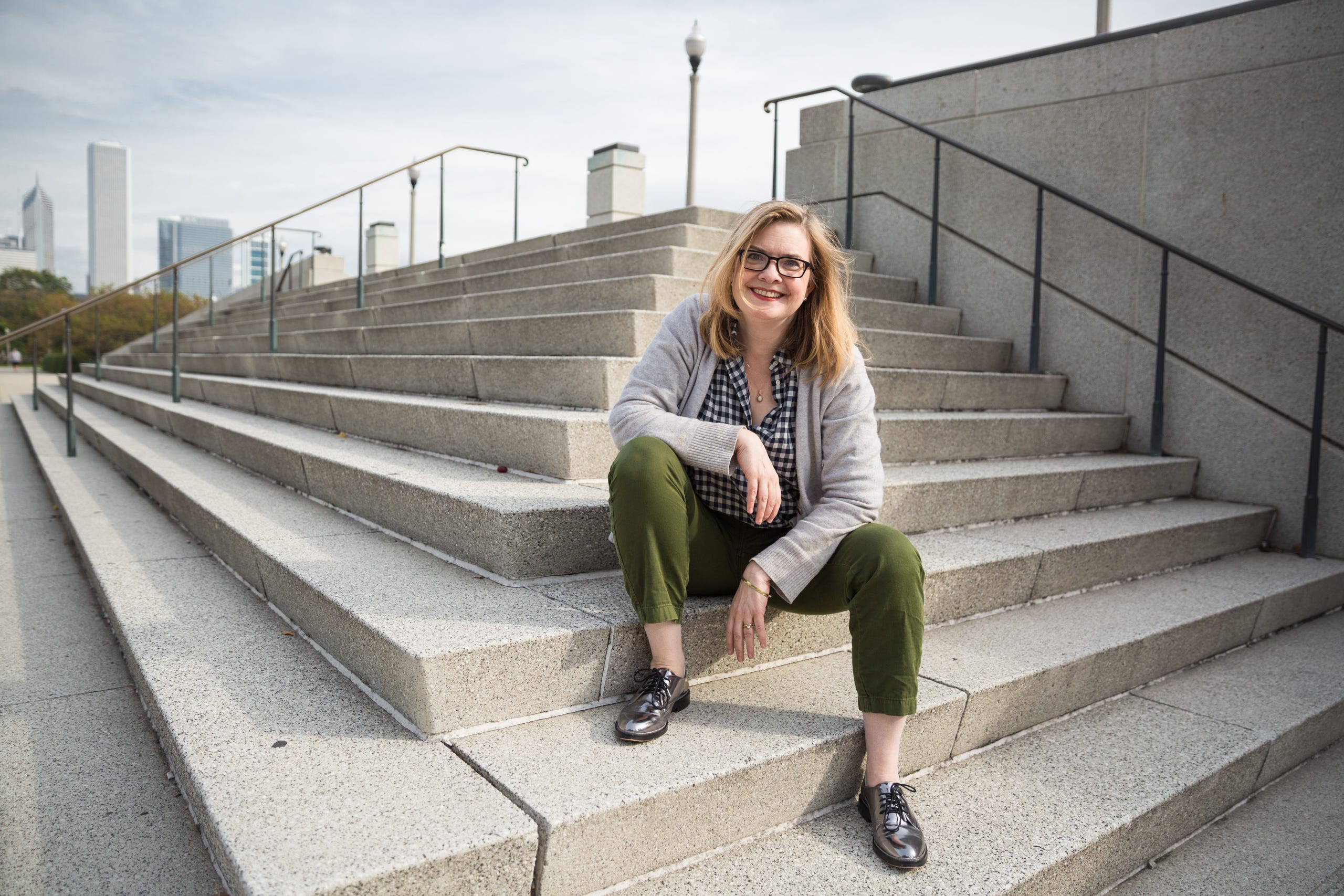
Anne Libera is Director of Comedy Studies at The Second City and she is an Associate Professor at Columbia College Chicago where she created and coordinates the Comedy Writing and Performance BA. She served as the Executive Artistic Director of The Second City Training Centers from 2001 to 2009. In a nutshell: She is a legend at in the improv comedy community!
In her new book “Funnier: A New Theory for the Practice of Comedy”, Anne debunks the myth that “either you are funny, or you aren’t” and breaks the magic of comedy down into an innovative theory and practical toolkit. I recently sat down with her and asked her some questions about her awesome new book.
Who are you and why did you write this book?
I am a comedy director and teacher who has worked at The Second City in Chicago for over 35 years. In 2011, I created the first degree in Comedy Writing and Performance at Columbia College Chicago where I am now an Associate Professor. The book really came out of my teaching; there is a myth out in the world that “you are either funny or you’re not” and, while there are certainly people who are have a natural talent for comedy (just as there are people who have a natural talent for athletics), I knew that there were ways of educating comedians that made them better - just as training and coaching make an athlete better.
My book shares the insights about how to train as a comedian that I developed in my college programs; helping people who are interested in doing comedy to be, in a word “Funnier.”
Tell me about the BA degree in Comedy Writing and Performance that you created in 2011?
See above but also, one of the insights that I had when I created the degree was that the most successful people in the comedy industry are writer/director/performers who work across mediums. You see it over and over, comedians like Quinta Brunson, Stephen Colbert, Tina Fey, or Richard Pryor and Joan Rivers (to go back a ways).
I created a curriculum that focused on comedy cross training, making the joke writers create characters, and the physical comedians hone their point of view: it was in teaching that kind of curriculum that I really dug into the research and ideas that lead to my theory of comedy.

What is your theory of comedy?
First, it’s important to say that I define comedy as “something that is created with the intention of generating laughter and humor in a given audience” - when we create something that is designed to do that, we are manipulating three primary elements.
The first and maybe most important of those elements, is recognition. I truly believe that the base aspect of comedy is sharing our world and the way that we see that world and that laughter, as Mike Nichols once said, is at base just “a really loud YES!”
The second is pain. We don’t have comedy without some kind of pain. Even a pun has the discomfort of a minor mistake brought on by a word with two different meanings. All the way to the gallows humor of joking about death or destruction.
But recognition and pain are just tragedy without the third element which I refer to as distance, it’s the ability to look at that recognition and pain from vantage point that renders them (in the words of humor theorist Pete McGraw) benign.
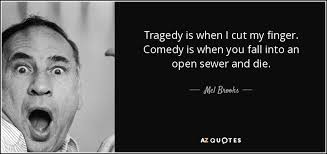
It can be temporal distance (tragedy plus time equals comedy) or physical/psychological distance (according to Mel Brooks “Tragedy is when I cut my finger, comedy is when you fall into an open sewer and die”).
The thing about thinking about comedy in this way is that it helps understand the relative nature of comedy, how what is funny changes from person to person and from era to era. And because so much of comedy is revision, it gives comedians a concrete way to adjust their comedy to make it funnier to the audience that they will be performing it for.
What are the five components of comedy?
There’s a tendency to think of comedy as just jokes but it good comedy doesn’t have to be jokes (which are defined as being a setup that sets up an expectation followed by a punchline that reverses that expectation in a way that is surprising) but if we think about comedy as consisting of four additional components beyond Joke, we broaden the palate from which we build comedy and more clearly see how it works across different mediums. The five components that I identify are: Jokes, Physical Comedy, Narrative (which includes order and structure), Character, and Point of View (perspective).
Why is the concept of the “ensemble” so important to you?
I really entered comedy through improvisation and working improvisationally at The Second City and my work has been strongly influenced by the work of the great improv teacher Viola Spolin.
There is a tendency to think of ensemble as a specific group of people but for comedy I think it is more valuable to think of ensemble as a mindset or, even better, a way of behaving. That when I am creating comedy collaboratively (and truthfully we are always creating comedy collaboratively because even in standup you are collaborating with the audience) I take into account that I am making something qualitatively different because of our collaboration; something that I would not and could not make if you were not here. It doesn’t mean that you don’t disagree or have creative conflict but if you remove the idea of “my idea vs. your idea” suddenly all sorts of new opportunities and discoveries show up.
What does the latest neuroscience of laughter suggest about the nature of comedy?
Comedy and neuroscience (actually all science) are strange bedfellows, because as I show in my book, comedy isn’t just one thing, it’s a collection of things that work together to generate laughter in a given audience. BUT, there’s some interesting research out of China that suggests that the part of the brain that processes humor is also the part that processes insight.
Can you teach anyone how to be funnier? Aren’t some people naturally more funny than others?
There’s no doubt that there are some people who have a natural talent for certain kinds of comedy. And this book is definitely here to help those people hone their craft.
But that’s really beside the point. What I really want to dispel is the myth that comedy is magic, that it is some super secret thing that only super special magic people get to do. People who will never in a million years attempt professional comedy can still benefit from understanding how humor and comedy work and can use those principles in their real life.
One of the simplest tools of comedy is simple self disclosure – sharing non-vulnerable specific details about yourself in conversation. That’s something that people who are not comedians can do to be “funnier” and also help make genuine connections with people in their life.
What are some techniques for becoming a better comedy writer?
The worst way to start as a comedy writer is to sit down at a keyboard or with a notebook and task yourself to “Come up with something funny.” I encourage my students to have a daily writing/observation practice, to start by generating lots of raw material, some of it could have comedic potential (Like a list of “Things that Used to Be Cool”) but also just “Things You Remember About Being a Kid” or descriptions of people that you see on the train. Reading through that raw material will help you generate ideas that you can form into comedy.
What is “good comedy hygiene”?
There are a lot of gray areas in comedy work, you take risks, you collaborate with a wide variety of people and there are a lot of ways that young comedians can be taken advantage of or (sometimes accidentally) take advantage of others. Good comedy hygiene is a name that I use for a set of practices that I recommend for my students that help them protect themselves and make sure that they are good collaborators. It includes things like taking a minute or two at the beginning of a collaboration to make agreements about who is taking what role in the process, how you are going to handle disagreements, and who has “ownership” of the material if it somehow ever makes it to a professional space. It’s about not taking advantage of all the gray areas to screw over other people but also protecting yourself to be a better collaborator.
Great post, SBK. I also interviewed Anne about her amazing book and wrote this post about our conversation; https://substack.com/home/post/p-180654118