

Getting the distinction between intelligence and consciousness right may be one of the most consequential things we do for the future of humanity. I’m becoming more convinced of that by the day.
Most people who take up the intelligence-versus-consciousness distinction are those who study philosophy of mind or AI safety. I am taking this up from a humanistic psychology perspective (and as someone trained in cognitive science). I disavow reductionism. I really believe that a human can’t be reduced to a bundle of behaviors, drives, or computations. We must defend the value of understanding the living, experiencing, meaning-making subject against every attempt by educators and now AI creators to shrink things to a single metric— intelligence. Consciousness, the felt sense of being alive, is a whole person metric.
✦✦✦
There is an assumption in the AI world that as machines get smarter, they get closer to having a mind. The real fear people are having right now, that they will be “surpassed” by machines, rests on this assumption. But smart and sentient are on two different axes, and the difference is no small thing.
Intelligence can be thought of as the capacity to learn, reason, solve problems, and achieve goals. Intelligence is measurable, seems to be able to transcend substrate (i.e., intelligence doesn’t require a biological substrate), and it’s scaling exponentially in machines at this very moment.
In contrast, consciousness is subjective experience, the “what it is like” to be something (see Thomas Nagel). Intelligence is about competence. Consciousness is about being. You can have an extremely intelligent machine with absolutely no real comprehension or inner experience. You can have a conscious being that isn’t very intelligent. These things come apart. But we keep fusing them.
As I write about in my book Ungifted: Intelligence Redefined, there is a long history among psychologists (especially in the U.S.) treating intelligence as a proxy for both mind and moral worth. There is often an assumption among intelligence researchers that “smarter” means “more of a person”. I call bullshit.
There are so many ways in which intelligence and consciousness don’t show up together. Start with machines. They keep getting more capable, and there is still no good evidence that they experience anything from the inside. Neuroscientist Christof Koch has spent much of his career on exactly this question, and his version of Integrated Information Theory suggests the gap could be permanent rather than temporary. On his view, consciousness depends on how a system’s physical parts actually cause and constrain one another, rather than on how clever the computation running on top of them happens to be. A computer can simulate a hurricane without anything getting wet, and it may simulate a brain the very same way, copying the behavior while producing none of the felt experience. If Koch is right, you could build a machine far smarter than any of us that feels absolutely nothing.
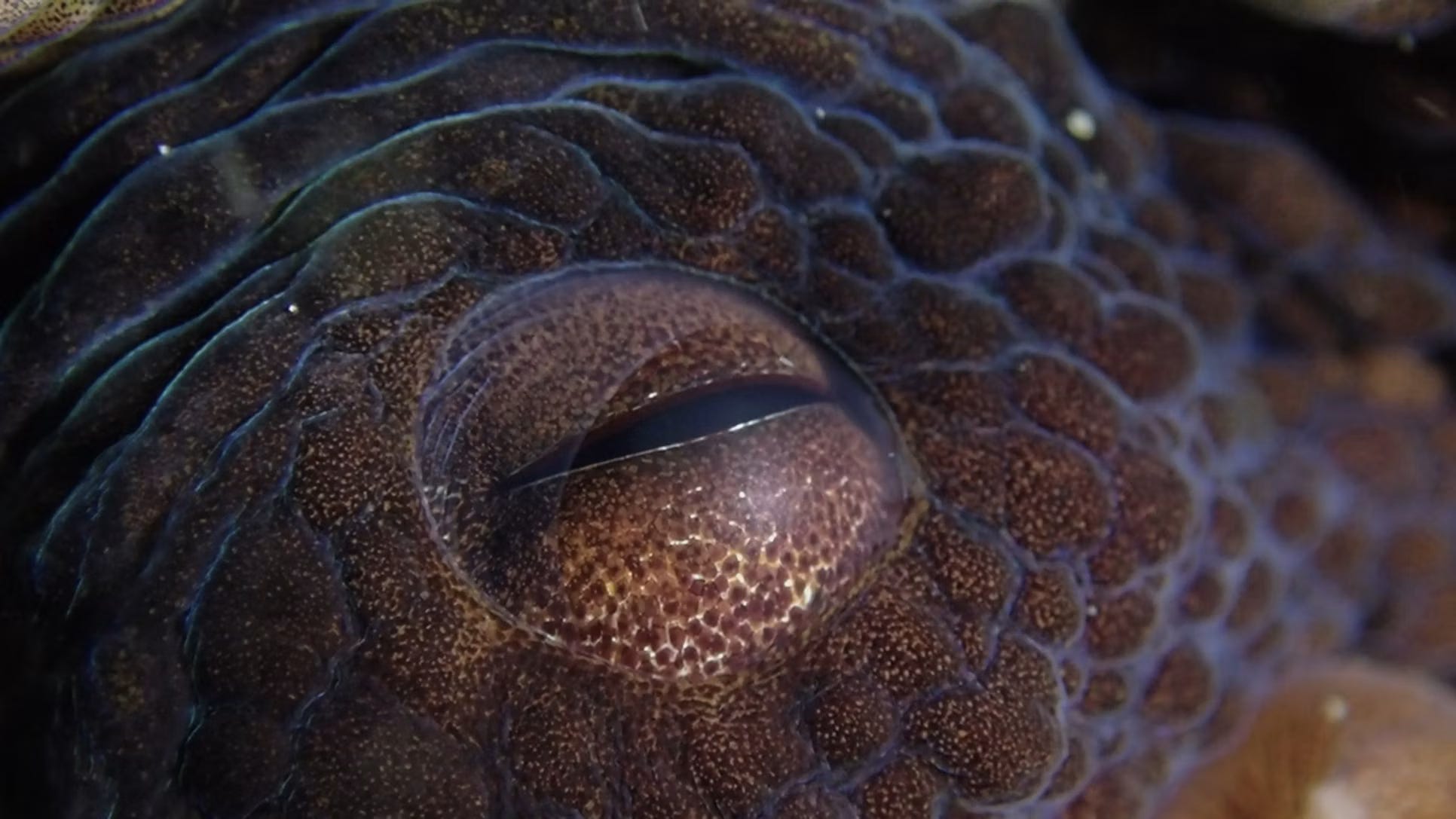
Now consider that consciousness turns up sometimes in the most unlikely of places. In 2024 a group of scientists signed The New York Declaration on Animal Consciousness, arguing there is a realistic chance that bees, octopuses, fish, and even crabs have some form of felt experience. While a honeybee is unlikely to pass a calculus exam, it may still be like something to be that bee, foraging and finding its way through the world.
Also, consider biologist Michael Levin’s brilliant research (I look forward to speaking with him soon for a new project I’m working on). Levin calls it “basal cognition”, intelligence that doesn’t even need a brain. Levin studies goal-directed problem-solving that runs through living tissue itself, in cells that store memories and work toward outcomes with no neurons anywhere. Your own body is a great example. It’s carrying out smart, purposeful behavior in places that have no head to do the thinking.
But you don’t have to leave your own skull to watch these things come apart. Under general anesthesia, the brain goes on humming with electrical activity and making highly intelligent automatic decisions to keep us alive, while the experience of being there disappears completely. And in split-brain patients, whose connection between the two hemispheres has been surgically cut, perception itself can divide in two while the person’s sense of being one conscious self somehow stays whole.
In every single case, intelligence and consciousness pull apart. And what remains a great mystery is what philosopher David Chalmers referred to as the “hard problem” of consciousness. According to the hard problem, you can explain everything the brain does, every signal it takes in and every action it produces, and you will still not have explained why any of it comes with an inner feeling at all. Processing, no matter how intelligent, never logically adds up to experience.
✦✦✦
Now, back to humanistic psychology. The field was created as a reaction (or rather, a revolt) against reducing people to stimulus-and-response or just our unconscious drives. That’s why humanistic psychologists called themselves the “third force” of psychology (1= Freud, 2= behaviorism). Humanistic psychologists believe that the sacred thing about a human is the inner life, including the experiences of awe, love, creativity, giving, meaning, presence, and peak experiences. Every one of those is part of human consciousness, not intelligence. Self-actualization is all about becoming more fully human, and reaching toward becoming a fuller experiencer of one’s own unique life. Growth here is measured by awareness, depth, and connection. Not raw processing power.
So when culture breaks out in a panic that machines will “replace” or “surpass” us, a humanistic psychology can reply, “Yes, they may surpass our intelligence, but it won’t touch the things that make being alive matter in the first place.”
✦✦✦
The stakes here are extraordinarily high; higher than 99.9% of humanity realizes. For one, there are stakes for the moral status of the machines. While I don’t think AI is conscious right now, I do think with sufficient complexity they very well could be in the very near future. If we keep building more capable systems while assuming they could never feel anything, we could be building genuinely suffering systems on an enormous scale and dismiss their suffering. Indeed, that is the nightmare a growing number of researchers have started to take seriously, in reports like Taking AI Welfare Seriously, written by some of my favorite philosophers.
But the opposite mistake is just as real. We could project our moral concerns onto systems with no inner life at all, fooled by human-sounding language into grieving for a chatbot, while the actual harms these systems can do to real people go unnoticed. Both errors grow out of the same confusion, which is reading intelligence as proof of an inner life, in one direction or the other.
Then there is the issue of human moral status. I have a real issue with tying worth to intelligence. We have an ugly history of doing just that. This has already justified harm to animals and to cognitively disabled people. We have a history of sterilizing people we labeled “feebleminded” and a history of writing off kids in special education as hopeless, not even worthy of having a full self-actualized existence. Grounding the issue in sentience instead of the capacity to compute reorders our ethics and allows us to rebuild much of our ethics from the floor up, for the cognitively disabled person and the octopus alike.
Third, let’s not forget the meaning of a human life. If machines out-think us— and it looks like they increasingly will— what remains distinctly valuable is the experiencing itself, not the horsepower. That, my friends, is the humanistic payoff. The awe of standing in nature, or the ache of loving someone so much it hurts. None of that shows up as a benchmark score. That is the whole point the humanistic psychologists were trying to make in the 60s and 70s, and I'm making it right now in the era of the AI revolution.
✦✦✦
The real treasure of being alive is the felt experience of aliveness. Machines are welcome to their horsepower. And yes, I’m sure increasing horsepower will allow a lot of humans to be more “efficient”, get more done quicker, and check more things off their to-do lists. But I believe the task of this new dawn for humanity is to stop measuring the worth of minds— human or artificial— by intelligence. I believe we need to learn to treat consciousness as sacred and to care, as humanistic psychology always has, about helping sentient beings increase the quality of their experiencing (regardless of their competence)!
Smart is not enough. How fast a mind can compute does not tell us much about what the mind is worth, or what a life is for. It’s crucial for the future of humanity that we get this distinction right.
I find Ned Block's distinction between phenomenal and access consciousness incredibly useful (see attached 1995 paper). We use the word "conscious" to indicate both felt experience (phenomenal) and what we have "conscious" access to for reasoning and reporting purposes. Machines (currently) mimic access consciousness, but we have zero evidence that they are phenomenally conscious (and unfortunately such evidence may be inherently unobtainable).
https://tinyurl.com/4b2edwhe
“Yes, they may surpass our intelligence, but it won’t touch the things that make being alive matter in the first place.” Love this!